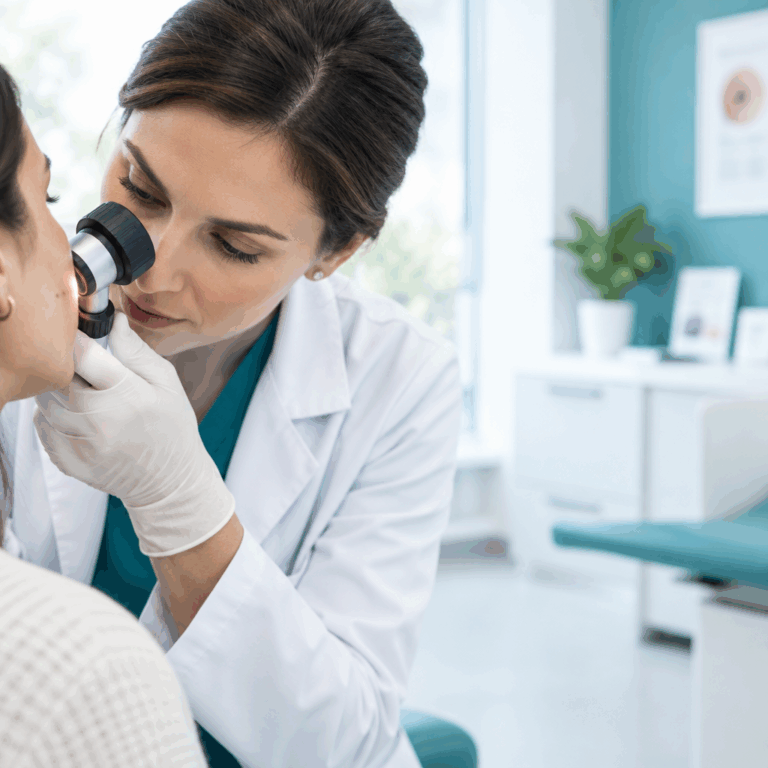
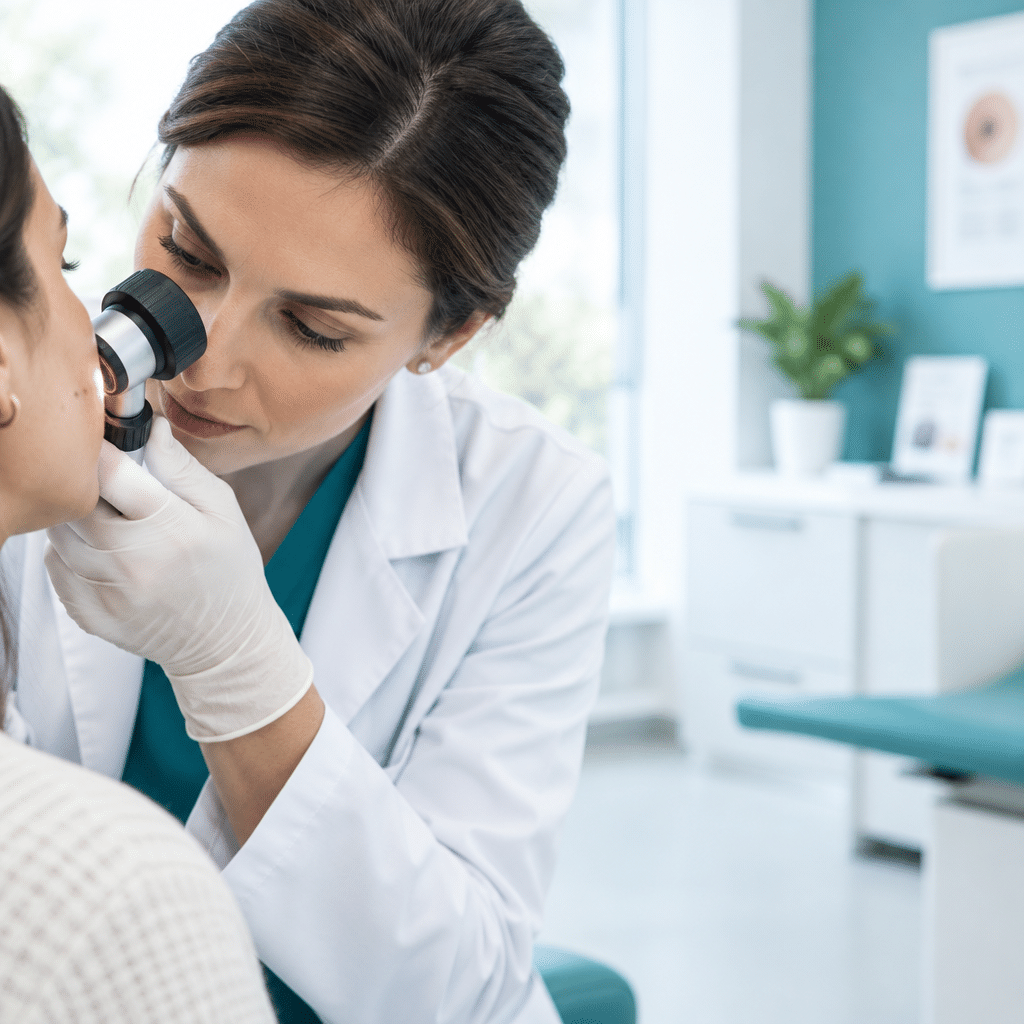
Most adults have somewhere between 10 and 40 moles, and the overwhelming majority are completely harmless. But sometimes a mole changes, catches on clothing, or simply bothers you when you look in the mirror. Whether your concern is medical or cosmetic, mole removal is one of the most common and straightforward procedures we perform at Precision Surgery in Birmingham. In this guide, we walk through why and when moles should be removed, what your treatment options are, and exactly what happens before, during and after the procedure, so you can approach your appointment with confidence.
Why Do People Have Moles Removed?
There are two main reasons patients come to us for mole removal, and both are equally valid.
Medical reasons
Sometimes a mole shows changes that warrant closer inspection or removal. This can include a mole that has grown, changed colour, become irregular in shape, started to bleed or itch, or one that a doctor has flagged during a skin check. Removing a suspicious mole allows it to be sent for histological analysis, where a laboratory examines the tissue under a microscope to confirm that it is entirely benign. This is the only way to know a changing mole is completely harmless, and it delivers real peace of mind.
Cosmetic and practical reasons
Many patients simply dislike the appearance of a mole, particularly on visible areas such as the face, neck or chest. Others are practical: a mole that rubs against a bra strap, collar or razor, or one that snags when brushing hair, can be a daily irritation. There is no need to feel that a cosmetic reason is less legitimate. Removal is a quick, safe procedure, and satisfaction rates are extremely high when it is done with careful attention to the final cosmetic result.
Warning Signs: When Should a Mole Be Checked?
Only a clinical assessment can tell you whether a mole is safe, but there are well-established warning signs that should always prompt a review. Dermatologists use the ABCDE rule as a simple checklist:
- A is for Asymmetry: one half of the mole does not match the other in shape or thickness.
- B is for Border: the edges are irregular, blurred, jagged or notched rather than smooth and clearly defined.
- C is for Colour: the mole contains varying shades of brown, black, red, pink or white, or has uneven pigmentation.
- D is for Diameter: the mole is larger than 6mm across, about the size of a pencil eraser, especially if it has grown.
- E is for Evolving: the mole is changing in size, shape, colour, elevation or sensation, or it has started to bleed, crust or itch.
Keep in mind that not every changing mole is dangerous, and most melanomas do not arise from existing moles at all. But any mole that fits one of these patterns deserves a professional opinion. It is also sensible to have a skin check if you have a large number of moles, fair skin, a history of sunburn or sunbed use, or a family history of skin cancer. If in doubt, get it looked at. A five-minute assessment can save months of worry and, occasionally, a great deal more.
Your Mole Removal Options: Which Technique Is Right for You?
The right technique depends on the character of the mole, its location and your priorities. During your consultation we will examine the mole, discuss your options and recommend the approach that gives the best balance of complete removal and the least noticeable scar.
Shave excision
For raised, superficial moles that sit above the skin surface, a shave excision is often ideal. The mole is carefully shaved off flush with the surrounding skin using a fine blade, leaving a flat surface that heals without stitches. The procedure takes only a few minutes and is well suited to moles on the face where we want to avoid the small linear scar that conventional surgical excision leaves. You can read more in our detailed guide to shave mole excision.
Surgical excision
For flat moles, larger moles or any mole where full-thickness removal is the safer choice, we perform a surgical excision. The mole is removed together with a small margin of healthy skin, and the wound is closed with fine sutures, leaving a thin, discreet scar. This technique guarantees the deepest margin of removal, which matters most when the mole has any suspicious features and needs complete laboratory analysis.
What about laser removal?
Laser treatment is heavily advertised, but it has real limitations for moles. Because the laser destroys the tissue rather than preserving it, nothing can be sent for laboratory analysis. That means a laser-treated mole can never be checked under the microscope. For this reason, most responsible practitioners in the UK reserve laser therapy for pigmentation problems and sun spots rather than true moles. If a clinic offers to laser off a mole without a prior clinical assessment, treat it as a red flag.
What Happens on the Day of Your Procedure
Mole removal is performed under local anaesthetic as a walk-in, walk-out procedure, so you stay fully awake, eat normally beforehand, and drive yourself home afterwards.
- Marking and anaesthetic: the mole and surrounding skin are cleaned and marked, and local anaesthetic is injected. The injection stings for a few seconds, after which the area is completely numb.
- Removal: the mole is removed using the technique agreed at your consultation, typically taking between 10 and 20 minutes.
- Closure: a shave wound is left to heal naturally with a dressing. An excision wound is closed with fine stitches, some of which dissolve on their own.
- Aftercare instructions: before you leave, we explain exactly how to look after the wound, what to expect over the coming days, when your follow-up or wound check will be, and we arrange your scar review appointment.
Most patients tell us the appointment felt far easier than expected. Nervous patients are often surprised at how quick the procedure actually is, and many have their mole removed and are back at work the same day.
Recovery, Aftercare and Scarring
Recovery from mole removal is generally uncomplicated, and most people return to normal activities the same or next day. In the first 48 hours there may be mild tenderness or a small bruise, which settles quickly.
A few simple aftercare steps keep healing on track:
- Keep the wound dry for the first 24 to 48 hours as advised by your surgeon.
- Clean gently and apply a simple dressing or healing ointment as directed.
- Avoid swimming and heavy sweating until the wound has fully closed.
- Attend your follow-up appointment for stitch removal or a wound check.
Every removal leaves some mark. A shave excision typically settles to a flat area that may be slightly paler or darker than the surrounding skin. A surgical excision leaves a fine line scar that fades steadily over 12 to 18 months. Two habits make a real difference: from two weeks after the procedure, massage the healing area regularly with a bland moisturiser to soften the scar, and protect it from the sun with SPF 30 or above for at least a year, as ultraviolet exposure can darken a young scar. We discuss this in more depth in our guide to surgical scarring recovery.
Why Have Your Mole Removed Privately?
Choosing private care for mole removal gives you three practical advantages. First, speed: you can typically be seen within days rather than waiting weeks or months, which matters both for peace of mind and for suspicious moles. Second, choice: you decide when to have the procedure done, at an appointment time that fits around work and family. Third, continuity: the surgeon who assesses your mole, removes it and reviews your scar is the same person throughout, so the outcome, including the best possible cosmetic result, is a personal matter.
At Precision Surgery in Birmingham, all procedures are performed by a consultant plastic surgeon in dedicated, fully equipped private facilities. Your removed mole is routinely sent for histological analysis, so you receive definitive answers, not just a removal.
Common Questions About Mole Removal
Does mole removal hurt?
The only uncomfortable moment is the local anaesthetic injection, which stings for a few seconds. Once the anaesthetic has taken effect, you should feel nothing but a light pressure or tugging sensation. When the anaesthetic wears off a few hours later, most patients describe the area as mildly sore rather than painful, and any discomfort is usually well controlled with simple paracetamol. Avoid aspirin and ibuprofen in the first 48 hours unless advised otherwise, as they can increase bruising.
Will the mole grow back?
When a mole is completely removed by surgical excision, it is very unlikely to return. With shave excision, there is a small chance, usually under one in ten, that some residual pigment cells remain in the deeper skin and the mole gradually repigments or regrows over time. If that happens, a simple repeat procedure removes it definitively. We will discuss your individual likelihood at consultation, as it depends on the type and depth of the mole.
Can I have several moles removed at once?
Yes. Many patients choose to have two or three moles treated in a single visit, which is more convenient and usually more cost-effective than separate appointments. Each mole is assessed on its own merits, so we can safely combine removals as long as the total operating time stays within comfortable limits for a local anaesthetic session.
How soon can I wear makeup over the area?
Once the wound has fully closed and any surface stitches have been removed or dissolved, usually after about one to two weeks, mineral-based makeup can be used gently over the healing skin. Avoid applying products to an open wound, and continue to protect the area with SPF once you are back to your normal routine.
The Bottom Line
Mole removal is a quick, safe and well-tolerated procedure. If you have a mole that is changing, irritating or simply affecting your confidence, it deserves a professional opinion. Likewise, if you have noticed any of the ABCDE warning signs, do not wait: a prompt assessment gives you certainty and keeps every option open.
Book Your Mole Removal Consultation in Birmingham
If you would like a mole assessed or removed, we are here to help. Your consultation includes a full clinical assessment, a clear discussion of your options, and a treatment plan tailored to give you the best possible result. Call us on 07822 002890 or fill out our contact form to book your appointment.