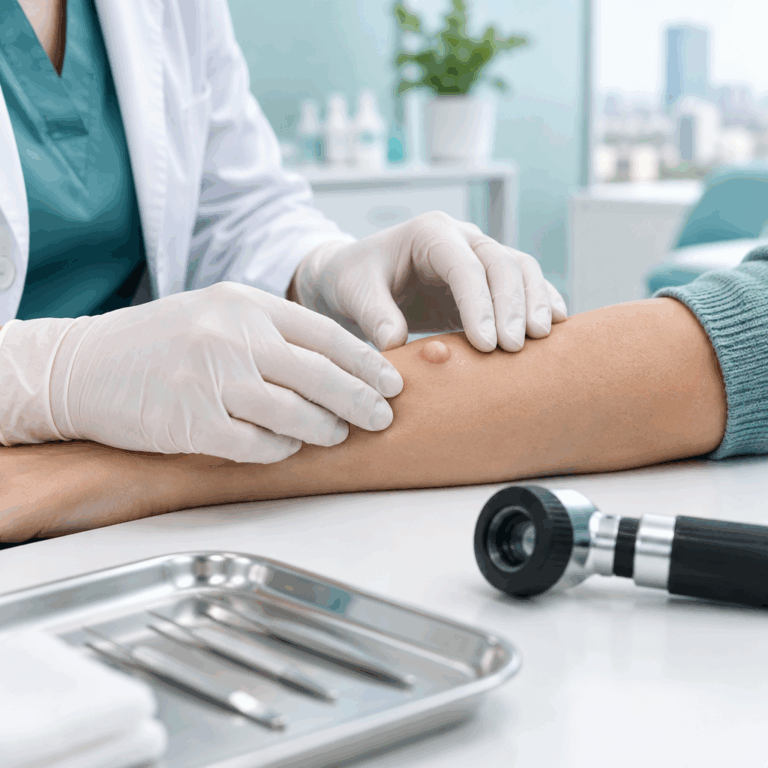

The earlobes are small, but they play an outsized role in how we look and feel. They frame the face, they carry the jewellery we wear every day, and when they are torn, split or stretched, the change is impossible to hide. A torn earlobe can make you self-conscious in photographs, at work or on video calls, and a lobe that has split through the piercing hole can no longer hold an earring at all.
The good news is that earlobe repair is one of the most reliable and satisfying procedures we perform at Precision Surgery in Birmingham. It is carried out under local anaesthetic, takes less than an hour, and the results restore a natural, balanced earlobe shape that most patients are delighted with. In this guide, we explain why earlobes get damaged in the first place, what earlobe reconstruction involves, how recovery works, and what you need to know about re-piercing afterwards.
Why Do Earlobes Get Damaged?
Earlobes are made of soft skin and fatty tissue with no cartilage for support, which makes them flexible but also vulnerable. There are three common patterns of damage we see in clinic.
Torn and split earlobes from earrings
By far the most frequent cause is earring-related injury. An earring that is caught on a jumper, hairbrush, a child’s grab or a seatbelt can tear through the piercing hole in an instant. Sometimes the tear happens suddenly, but just as often the piercing hole gradually widens over months and years from the constant weight of heavy earrings, until it eventually splits through to the bottom edge of the lobe. Once the lobe has split, it cannot heal on its own because the piercing track is lined with healed skin, so surgery is the only way to restore it.
Stretched earlobes from gauges and heavy jewellery
Stretched piercings, sometimes called flesh tunnels or gauges, were fashionable for many years, and some people later decide they want a conventional earlobe shape back. When a large gauge is removed, the lobe often does not fully retract, leaving a band of thin, sagging tissue or an elongated hole. Others have permanently stretched lobes simply from decades of wearing heavy statement earrings. Both situations respond very well to surgical repair.
Trauma, skin changes and previous surgery
Earlobes can also be damaged by bites, road traffic accidents, sporting injuries or previous surgical procedures that left the lobe uneven. As we age, the earlobe also thins and lengthens, and some patients seek earlobe reduction purely for a fresher appearance. Keloid scarring after piercing is another common reason patients come to see us, and in those cases, treatment is focused on the scar itself rather than reconstruction, sometimes combined with steroid injections.
What Does Earlobe Reconstruction Involve?
The consultation
Every earlobe repair begins with a proper consultation. We examine the earlobe, discuss how the damage occurred, and talk through what you want to achieve, whether that is wearing earrings again, closing a stretched hole, or simply having a smooth, natural-looking lobe. We will also ask about your history of keloid or hypertrophic scarring, because earlobes are a common site for problematic scars and this influences how we plan your aftercare. You will leave the consultation knowing exactly what the procedure involves, what the scar will look like and what to expect during healing.
The procedure itself
Earlobe repair is a walk-in, walk-out procedure performed under local anaesthetic, which means you are awake and comfortable throughout. The anaesthetic injections take a minute or two to work, and after that you should feel nothing more than gentle movement. The procedure typically takes 30 to 45 minutes per earlobe.
The technique depends on the pattern of damage. For a fully split lobe, the edges of the split are carefully freshened, the old piercing track is removed so the two sides can heal together properly, and the lobe is then closed in layers. Closing the layers separately, including the fatty centre of the lobe, is what prevents the notch or cleft that can appear when a split lobe is simply stitched together at the surface. For a stretched piercing hole, the widened track is excised and the lobe is reshaped. For gauged or elongated lobes, a wedge of excess tissue is removed so that the remaining tissue is redistributed into a natural contour with a soft, curved lower border. Fine sutures are used on the skin surface, and most are dissolvable.
Does it hurt?
Most patients describe earlobe repair as far easier than they expected. The local anaesthetic injections are the most uncomfortable part and feel similar to a dental injection. During the procedure itself, patients usually chat, listen to music or scroll their phones. Afterwards there is mild soreness for a day or two, which is comfortably managed with simple paracetamol.
Recovery and Aftercare: What to Expect
One of the reasons earlobe repair is so popular is the straightforward recovery. There is no need to take more than a day off work for most people, and you can drive yourself home afterwards.
For the first 24 hours, the earlobe will feel tender and may look a little bruised. You can wash your hair from the day after the procedure, gently patting the ear dry. We ask you to keep the repair dry for the first day, avoid swimming for about two weeks, and sleep on the other side for the first week if possible.
The surface stitches are usually dissolvable and fall away on their own within one to two weeks. Some patients prefer to have any remaining stitches trimmed at a review appointment, which takes seconds. Most people feel comfortable being seen out and about within a day or two, as the dressings are minimal and the fine scar sits along the natural contours of the earlobe.
Scar massage usually begins around two to three weeks after surgery, once the skin has sealed. Gently massaging the scar with a plain moisturiser for a few minutes each day softens the healing tissue and encourages it to fade into a thin, pale line. In patients with a history of keloid scarring, we may recommend silicone gel or tape, and occasionally a short course of steroid injections, to keep the scar flat. Full scar maturation takes six to twelve months, but the improvement in the first two months is usually dramatic.
You should not wear earrings for at least six weeks after surgery, and ideally closer to three months for the scar to gain strength. We will review your healing and advise you personally on timing.
Re-Piercing After Earlobe Repair
The question nearly every patient asks is: “Will I be able to wear earrings again?” In the great majority of cases, yes. Once the lobe has fully healed, usually after around three months, the earlobe can be safely re-pierced.
There are two important rules. First, the new piercing should be placed slightly away from the original hole and the repair scar, because piercing directly through a scar weakens it and increases the risk of the lobe splitting again. Second, have the piercing done by a professional using sterile technique, or ask us about re-piercing at your review appointment. Start with lightweight studs and avoid heavy earrings for the first few months. Choosing lighter jewellery long term, and removing earrings before dressing, brushing hair or playing with children, dramatically reduces the chance of the problem returning.
Patients with stretched or gauged lobes should also expect realistic outcomes: a very large stretch can leave less tissue to work with, but even in these cases, reconstructive techniques can usually restore a comfortable, natural-looking earlobe.
Frequently Asked Questions About Earlobe Repair
Will I have a scar?
Every repair leaves a scar, but earlobe scars usually settle into a fine, pale line that sits along the natural edge or contour of the lobe. In most people the scar becomes very difficult to see at conversation distance. If you form keloid scars, tell us at the consultation so we can plan preventative treatment.
Can both earlobes be repaired at the same appointment?
Yes. Repairing both earlobes in one visit is common, and because the procedure is under local anaesthetic, you can go home straight afterwards. Repairing both sides together also helps us match the shape and size of the two lobes.
Is earlobe repair covered by the NHS?
Earlobe repair for torn or stretched lobes is generally considered a cosmetic procedure, so it is usually not available on the NHS unless there is an exceptional medical reason. That is why most patients choose to have it done privately, where the waiting time is short and the appointment is arranged around your schedule.
What are the risks?
Earlobe repair is very low risk. As with any procedure on skin, the main considerations are scarring, minor infection and a small chance of the repair separating if the lobe is knocked in the first week or two. Choosing experienced surgical care and following your aftercare instructions closely keeps these risks very low.
Why Choose Precision Surgery for Your Earlobe Repair?
Earlobe reconstruction is a small procedure with big demands on precision. The lobe is visible from the front and the side, the two ears frame the face and need to be symmetrical, and the technique used determines whether you end up with a smooth contour or a visible notch. Our team at Precision Surgery in Birmingham performs earlobe repair regularly, under consultant-led care, in a calm, clean and fully accredited environment.
We keep the whole process simple: a thorough consultation, a short procedure under local anaesthetic, clear aftercare instructions and a follow-up review to check the scar and discuss re-piercing. We also treat keloid scars and offer steroid injections on site, so if your earlobes have a history of problem scarring, you are in the right place.
If a torn, split or stretched earlobe has been bothering you, help is closer than you think. Call us on 07822 002890 or fill out our contact form to book your appointment.