If you have a raised mole that bothers you — on your face, neck, or anywhere else — you may have been told that surgical excision with stitches is your only option. That is not always the case. Shave excision is a simpler, faster, and highly effective technique that removes raised moles flush with the skin surface, often with no stitches at all and minimal scarring. For the right type of mole, it is the cosmetic gold standard. This guide explains exactly what shave excision involves, who it suits best, what recovery looks like, and how it compares to traditional surgical excision.
What Is Shave Excision?
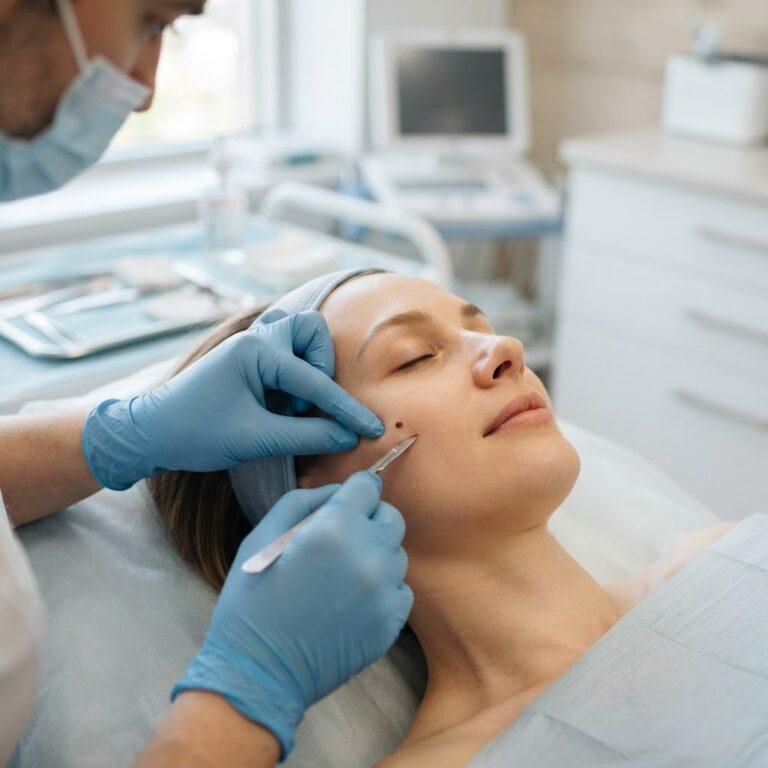
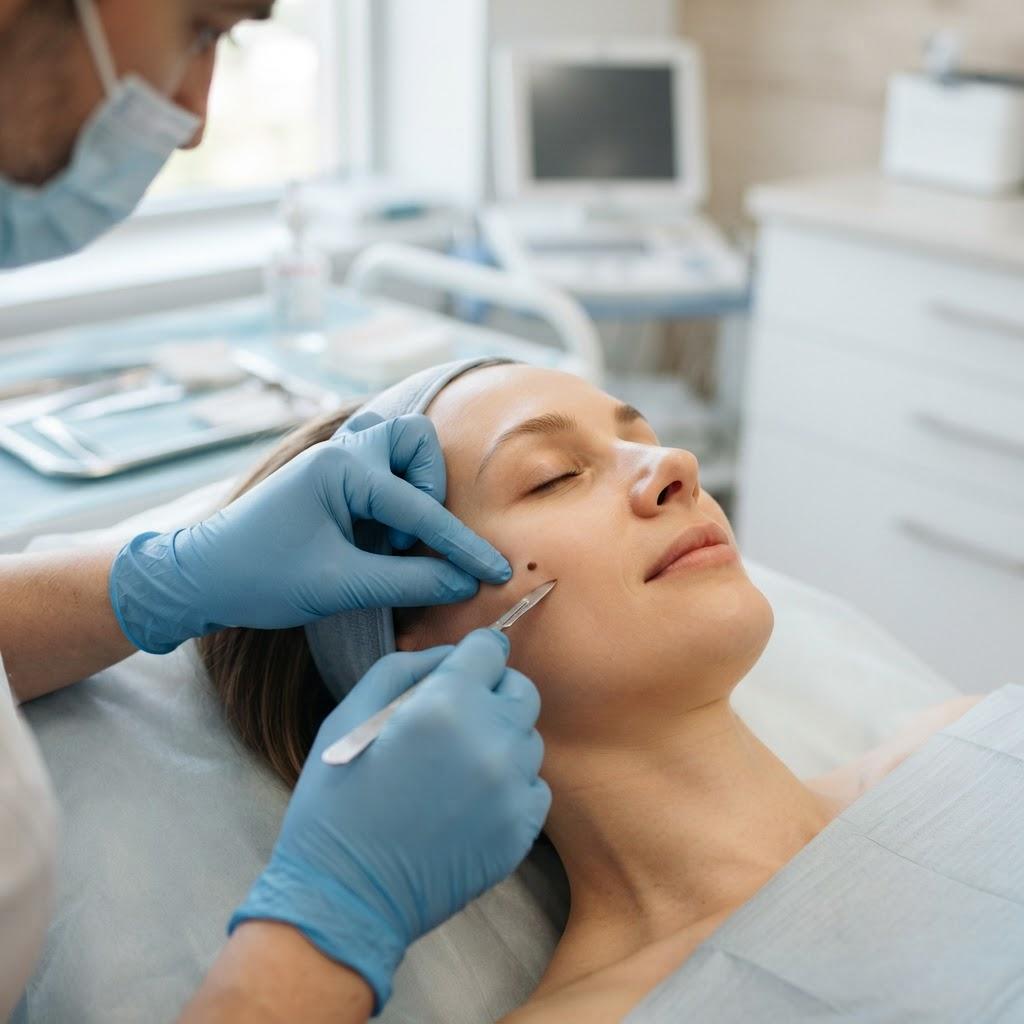
Shave excision is a technique in which a surgeon uses a sharp surgical blade to carefully shave a raised mole level with the surrounding skin. Unlike full elliptical excision, which cuts through the full thickness of the skin and requires stitches, shave excision removes only the visible portion of the mole — the part that sits above the skin surface. The wound left behind is typically a shallow, flat area that heals on its own through a process called secondary intention healing, without the need for sutures in most cases.
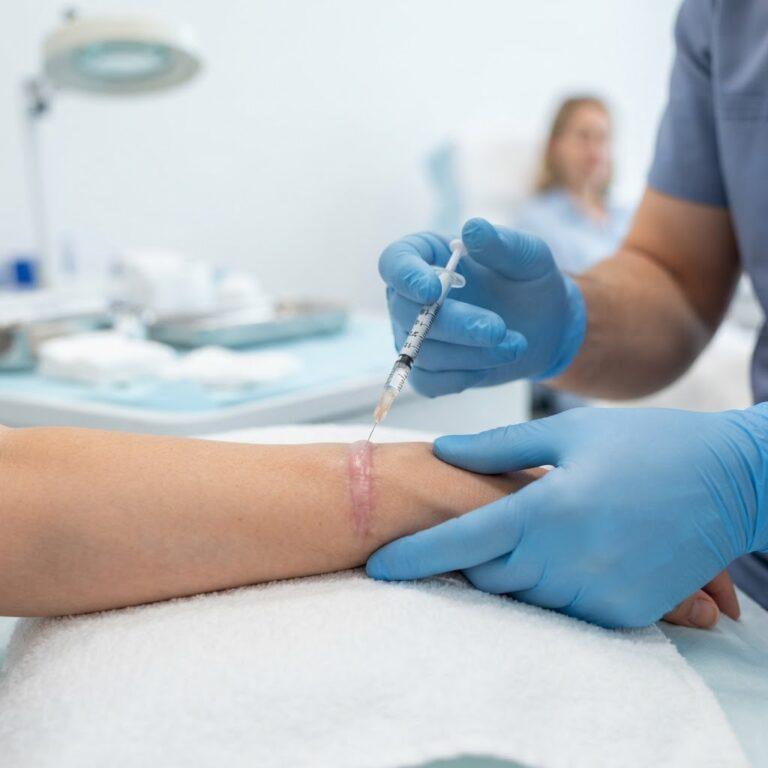
The procedure takes just a few minutes per mole. Local anaesthetic is injected beneath the mole to numb the area completely, so you feel pressure and movement but no pain. The surgeon then uses either a standard surgical blade or a specialised instrument called a Dermablade to remove the mole in a single, smooth pass. The edges are feathered so that the resulting wound blends seamlessly into the surrounding skin. Once the mole is removed, it is placed in a specimen pot and sent to the laboratory for histological analysis — an important step that confirms the tissue is entirely benign.
Which Moles Are Suitable for Shave Excision?
Not every mole can be removed with the shave technique. The ideal candidate is a raised, protuberant mole — the kind that sticks out from the skin and can be felt when you run your finger over it. These include intradermal naevi (soft, flesh-coloured moles), compound naevi (raised and pigmented), and some seborrhoeic keratoses. Flat moles are generally not suitable for shave excision because there is nothing raised to shave — these are better treated with elliptical excision or laser.
Shave excision is particularly popular for facial moles because the cosmetic outcome is often superior to full excision. On the face, any scar from stitches is visible, and the tension from suturing can distort surrounding structures like the eyelid or lip. Shave excision avoids all of this — the mole is removed flush with the skin, and the resulting flat wound heals with a colour match that is often indistinguishable from normal skin within a few months.
During your consultation, your surgeon will examine the mole carefully, assessing its size, shape, colour, and how raised it is. If there is any concern that the mole may have atypical features, full surgical excision may be recommended instead, as it removes the entire mole including any deeper component for complete pathological examination.
Shave Excision vs. Full Surgical Excision: Which Is Right for You?
Both techniques have their place, and the choice depends on the type of mole, its location, and your priorities. Here is how they compare:
Scarring: Shave excision typically leaves either no visible scar or a very small flat area that fades to match your skin tone. Full excision always leaves a linear scar where the skin was cut and stitched, though a skilled surgeon will place this in natural skin creases to minimise visibility.
Stitches: Shave excision usually requires no stitches. Full excision always requires stitches, which are removed at 5–10 days depending on location.
Recovery time: Shave excision heals in 7–14 days with a simple flat scab that falls off naturally. Full excision takes 10–14 days for the wound to close, plus ongoing scar maturation over 6–12 months.
Tissue for pathology: Both techniques send tissue for histological analysis. Full excision removes the entire mole including deeper layers, which is preferred if there is any diagnostic uncertainty. Shave excision removes the raised portion, which is sufficient for clearly benign raised moles.
Recurrence: Shave excision has a small recurrence rate of approximately 5–8%, meaning the mole could gradually regrow over time. Full excision has a near-zero recurrence rate because the entire mole is removed.
Best for: Shave excision is ideal for clearly benign, raised moles — especially on the face — where cosmetic outcome is the priority. Full excision is preferred for flat moles, larger moles, moles with any atypical features, or when complete removal with zero recurrence is essential.
What Happens on the Day of Your Procedure
Shave excision is performed as an outpatient procedure — you come in, have the mole removed, and go home the same day. The entire appointment typically takes 20–30 minutes, with the actual removal lasting just a couple of minutes per mole.
When you arrive, your surgeon will confirm the mole to be removed and mark it with a skin marker. The area is cleaned with antiseptic, and local anaesthetic is injected just beneath the mole. You will feel a brief sting from the injection, then the area becomes completely numb within seconds. The surgeon then shaves the mole flush with the skin using a precise, smooth technique. Bleeding is minimal and is controlled with gentle pressure and, occasionally, a small amount of electrocautery to seal any tiny vessels.
Once the mole is removed, a light dressing or Steri-Strip is applied. You will be given written aftercare instructions and the appointment for any follow-up review. The mole specimen is sent to the pathology laboratory, and results are typically available within 7–10 days. Your surgeon will contact you to confirm the histology result.
Recovery and Aftercare
Recovery from shave excision is straightforward and much quicker than from full surgical excision. Here is what to expect:
First 24–48 hours: Keep the area clean and dry. You may notice a small amount of pinkish fluid on the dressing — this is normal. Avoid touching the wound or picking at any dressing.
Days 3–7: A thin scab will form over the wound. This is a natural part of the healing process and protects the new skin forming beneath. Do not pick or scratch the scab — allow it to fall off naturally, which usually happens within 7–10 days.
Weeks 2–4: The scab will have fallen off, revealing fresh pink skin. This pinkness gradually fades over the following weeks and months. The area may be slightly lighter or darker than surrounding skin initially, but this evens out in most patients.
Months 2–6: The skin continues to mature and the colour normalises. In the majority of cases, the treated area blends in with the surrounding skin so well that it is difficult to tell a mole was ever there.
Sun protection is critical during the healing phase. Newly healed skin is prone to pigmentation changes if exposed to UV. Apply SPF 50 sunscreen daily to the area for at least three months, and avoid direct sun exposure where possible. This single step makes the biggest difference to your final cosmetic result.
You can return to work and normal activities immediately after the procedure. Avoid swimming, heavy exercise, and activities that may cause sweating for the first 48 hours. If the mole was on the face, you can apply makeup over the area once the scab has fallen off — typically after 7–10 days.
Will the Mole Come Back?
This is one of the most common questions patients ask about shave excision. Because the technique removes the raised portion of the mole rather than the full depth of the skin, there is a small chance — approximately 5–8% — that some pigment cells remain and the mole gradually regrows over months or years. If this happens, the regrowth is usually minor and the mole can be shaved again or, if you prefer, fully excised at that point.
For most patients, the excellent cosmetic outcome of shave excision outweighs the small recurrence risk. If complete removal with zero recurrence is your priority — for example, if the mole is in an area where you would not want to return for a second procedure — your surgeon may recommend full excision instead. This is a personal decision, and your surgeon will help you weigh the trade-offs.
Why Choose Precision Surgery for Shave Excision?
Shave excision is a technique-sensitive procedure — the quality of the result depends heavily on the skill and experience of the surgeon performing it. At Precision Surgery, our specialist plastic surgeon has extensive experience in facial and body mole removal, with a particular focus on achieving the best possible cosmetic outcome. We take the time to assess each mole individually, recommend the most appropriate technique, and ensure you feel fully informed and confident before proceeding.
Every mole we remove is sent for histological analysis, so you have complete peace of mind that the tissue has been examined by a consultant pathologist. We also provide comprehensive aftercare guidance and a follow-up review to monitor your healing and share your histology results with you directly.
Book Your Consultation
If you have a raised mole that you would like assessed or removed, the first step is a consultation with our specialist surgeon at Precision Surgery in Birmingham. We will examine the mole, discuss whether shave excision or full excision is most appropriate, and answer all of your questions — with no pressure to proceed on the day. Call us on 07822 002890 or fill out our contact form to book your appointment.