Scars are a natural part of the healing process, but sometimes the body produces more scar tissue than is needed. When a scar becomes raised, red, firm, itchy or extends beyond the original wound boundary, it can be both physically uncomfortable and a source of significant distress. Steroid injections are one of the most effective, well-established treatments for problematic scars — and at Precision Surgery in Birmingham, they form a key part of our scar management toolkit.
Understanding Problematic Scars: Hypertrophic vs Keloid
Not all raised scars are the same, and the distinction matters when it comes to treatment. There are two main types of excessive scar tissue that respond to steroid injections:
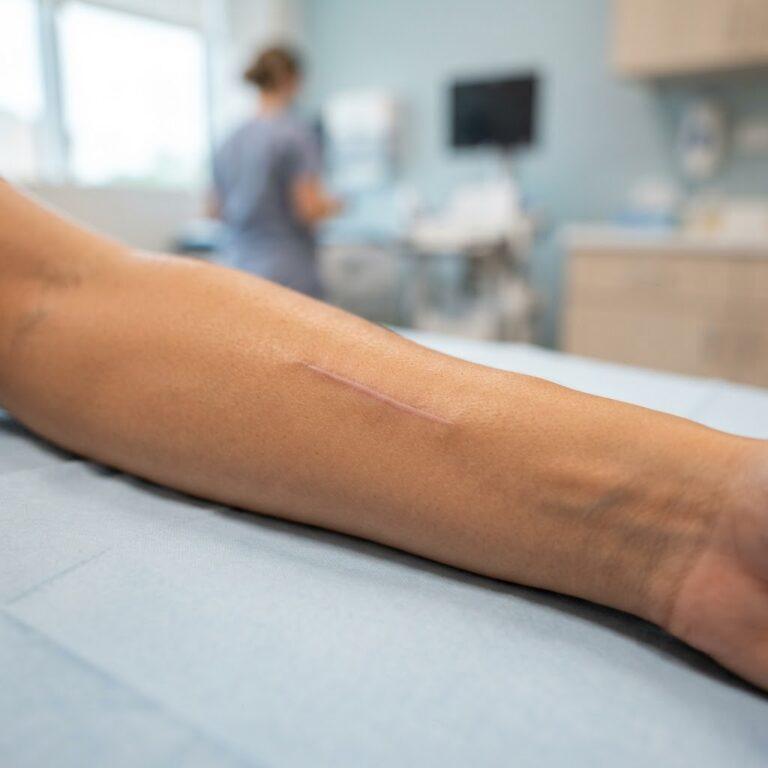
Hypertrophic scars stay within the boundaries of the original wound or incision. They are raised, red and sometimes itchy or tender, but they do not spread into surrounding skin. They often improve on their own over 12–18 months, though treatment can accelerate this process and improve the final result. Hypertrophic scars are particularly common after surgical incisions, burns and traumatic lacerations.
Keloid scars grow beyond the edges of the original wound, extending into surrounding healthy skin. They can be much larger than the original injury, are often dome-shaped or lobulated, and tend to be more symptomatic — itchy, painful and cosmetically concerning. Keloids are less likely to improve spontaneously and have a higher tendency to recur after treatment, making a structured management plan essential. They can develop after even minor skin injuries, including ear piercings, acne spots, vaccination sites and small scratches.
Both types contain excess collagen, and both respond to corticosteroid injection — but the treatment protocol, number of sessions and expected outcome differ. This is why an accurate assessment by a specialist is the first step.
Who Is at Risk of Problematic Scarring?
While anyone can develop a hypertrophic scar or keloid, certain factors significantly increase the risk:
- Skin type: People with darker skin tones (Fitzpatrick types IV–VI) are up to 15 times more likely to develop keloids than those with lighter skin. Keloids are also more common in people of African, Asian and Hispanic descent.
- Age: Keloids most commonly develop between the ages of 10 and 30, with younger skin producing more vigorous collagen in response to injury.
- Genetics: A family history of keloids increases your risk. If a parent or sibling has formed keloids, you are more likely to as well.
- Location: Certain areas of the body are notorious for poor scarring. The chest, shoulders, upper back, jawline and earlobes are high-risk zones where even minor wounds can produce problematic scars.
- Wound type: Deep wounds, wounds that are slow to heal, or wounds that become infected are more likely to produce raised scarring.
- Tension: Scars that cross joints or are subject to pulling and stretching during healing often heal with more bulk.
Understanding your risk factors helps your surgeon plan both prevention and treatment. If you know you are prone to keloids, this should be discussed before any elective procedure so that a preventative strategy can be put in place from day one.
How Do Steroid Injections Work?
The most commonly used injectable steroid for scars is triamcinolone acetonide, a corticosteroid that is injected directly into the scar tissue. The medication works at a cellular level to:
- Reduce collagen production: Steroids suppress the fibroblasts — the cells responsible for producing collagen — thereby reducing the bulk of the scar.
- Break down existing excess collagen: Over successive treatments, the existing dense collagen within the scar is degraded and reabsorbed by the body.
- Reduce inflammation: The redness, itchiness and tenderness associated with raised scars are driven by inflammation. Steroids calm this inflammatory response, often providing rapid symptom relief even before the scar has visibly flattened.
- Flatten and soften the scar: The combined effect is a scar that becomes flatter, softer, paler and less symptomatic over a course of treatment.
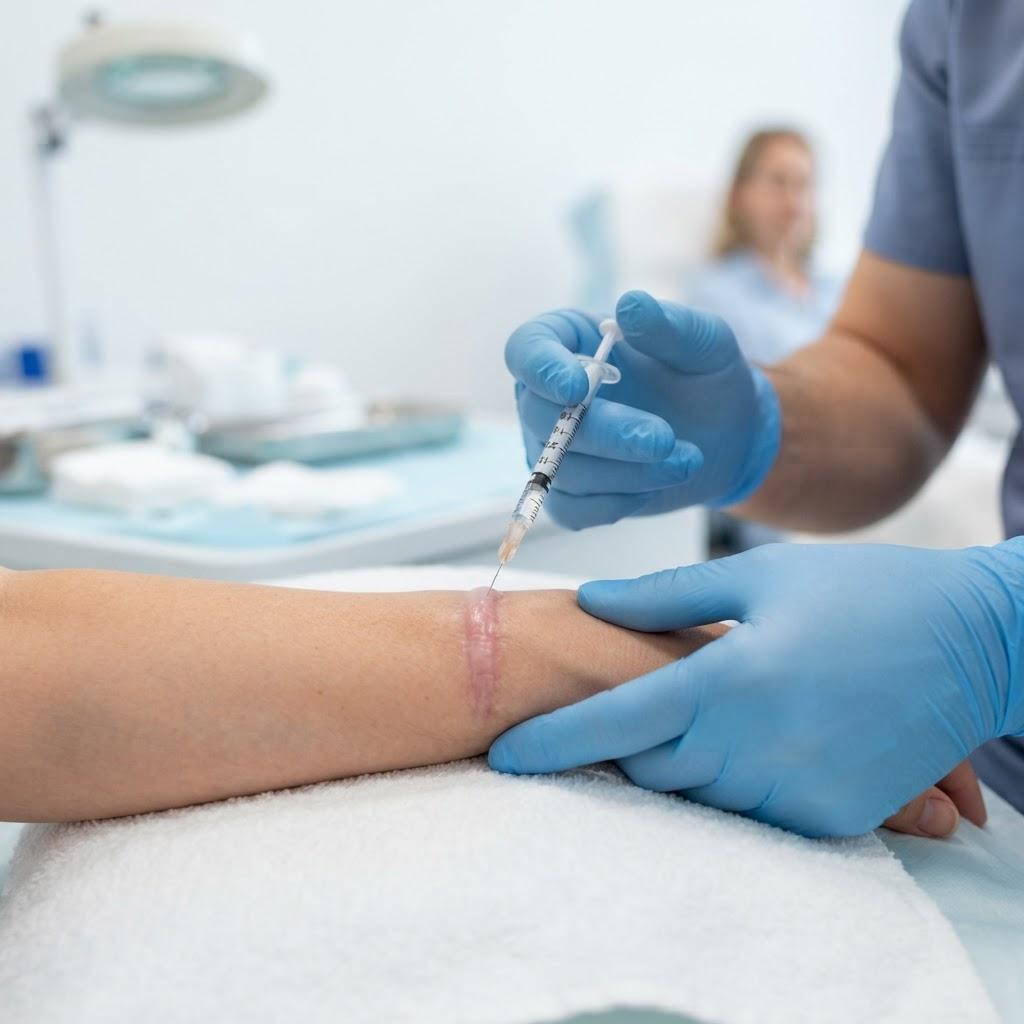
The injection is placed directly into the scar tissue itself, not into the surrounding skin. This targeted approach maximises the effect on the scar while minimising systemic absorption, meaning the steroid acts locally where it is needed.
What to Expect During Your Appointment
Treatment is carried out as a simple outpatient procedure — no anaesthetic is required, and you go home immediately afterwards. Here is what happens step by step:
1. Assessment: Your surgeon will examine the scar, measure it, and take photographs for monitoring. They will confirm whether it is a hypertrophic scar or a keloid and discuss the expected number of treatment sessions, the likely outcome, and any potential side effects.
2. The injection: Using a fine needle, the steroid is injected directly into the scar tissue. You will feel a brief stinging sensation, and as the scar fills with the medication you may feel some pressure. For larger or particularly firm keloids, a slightly higher concentration may be used. The injection itself takes only a minute or two.
3. Aftercare: A small dressing may be applied. You can return to normal activities immediately. You may notice some transient redness or slight swelling at the injection site, which settles within a day or two. No special wound care is required.
Most patients require a course of injections spaced 4–6 weeks apart. Typically, 3–5 sessions are needed for hypertrophic scars, while keloids may require more. The scar is reviewed at each visit and photographed so that progress can be tracked objectively — this also helps you see the gradual improvement, which can be difficult to judge from week to week.
When Are Steroid Injections Recommended?
Steroid injections are recommended in several clinical scenarios:
- Symptomatic raised scars: Scars that are itchy, painful or tender benefit from both the flattening and the anti-inflammatory effect, which often provides rapid symptom relief.
- Keloid scars: First-line treatment for established keloids, either alone or in combination with surgical excision. Injections can reduce the size, symptoms and redness of keloids without surgery.
- Hypertrophic scars that have not improved: If a raised scar has not flattened after 6–12 months of observation, injections can accelerate the maturation process and improve the final cosmetic outcome.
- Post-surgical scar management: In patients with a known tendency to form keloids, steroid injections may be used prophylactically after surgical excision of a keloid to reduce the risk of recurrence. This is typically started 2–4 weeks after surgery.
- Scars in cosmetically sensitive areas: Facial scars, earlobe keloids and scars on the chest or shoulders — areas notorious for poor scarring — often benefit from early intervention before the scar has fully matured.
Results, Limitations and Recurrence
Most patients see a noticeable improvement after 2–3 sessions. The scar becomes flatter, softer and paler, and symptoms such as itching and tenderness typically resolve early in the course. Photographs taken at each visit help you see the progress, which can be difficult to judge day to day.
It is important to set realistic expectations. Steroid injections can dramatically improve a scar but cannot make it disappear entirely. Some residual mark will remain, and the goal is to make it as flat, soft and inconspicuous as possible so that it blends with the surrounding skin.
Recurrence is the main challenge, particularly with keloids. Keloids have a tendency to regrow after treatment, which is why we often combine treatments — for example, surgical excision followed by steroid injections and silicone gel therapy. For patients with a history of recurrent keloids, a tailored, multi-modal plan gives the best chance of a long-term result. This may also include pressure therapy and, in some cases, low-dose radiation therapy for particularly aggressive keloids.
Side effects are generally minor when injections are performed by an experienced clinician. These can include temporary skin lightening (hypopigmentation) at the injection site, thinning of the skin, the appearance of small visible blood vessels (telangiectasia), and in rare cases, a slight depression in the skin surface. These effects are usually localised to the scar itself and are always weighed against the benefit of treating a symptomatic, growing scar.
Combining Treatments for Better Outcomes
Steroid injections are often most effective when used as part of a comprehensive scar management strategy. Depending on your individual case, your surgeon may recommend combining injections with:
- Silicone gel sheets or gel: Applied daily over the scar to maintain hydration and reduce collagen overproduction. Evidence supports their use both alongside injections and as a standalone preventative measure.
- Pressure therapy: Particularly useful for earlobe keloids, using pressure earrings to reduce recurrence. For body scars, custom pressure garments may be recommended.
- Surgical excision: For large or refractory keloids, excision followed by prophylactic steroid injections (and sometimes radiation therapy) can be effective. Excision alone for keloids has a recurrence rate of 45–100%, but combining it with steroid injections reduces this dramatically.
- Laser therapy: To address residual redness and improve surface texture once the scar has been flattened by injections. Pulsed dye laser is particularly effective for the vascular component of red scars.
The right combination depends on the scar type, location, your skin type and your previous scarring history. Your surgeon will tailor the plan to you and adjust it based on how your scar responds to treatment.
Book Your Scar Assessment in Birmingham
If you are living with a raised, itchy or growing scar that is affecting your comfort or confidence, the first step is a specialist assessment. At Precision Surgery in Birmingham, our consultant plastic surgeon will examine your scar, provide a clear diagnosis, and recommend a personalised treatment plan — whether that is steroid injections, silicone therapy, surgical revision, or a combination approach.
Call us on 07822 002890 or fill out our contact form to book your appointment. We offer flexible appointment times in a relaxed, professional environment, and there is never any pressure to proceed with treatment — just honest advice and expert care.
Related treatment: keloid scar removal and treatment in Birmingham.