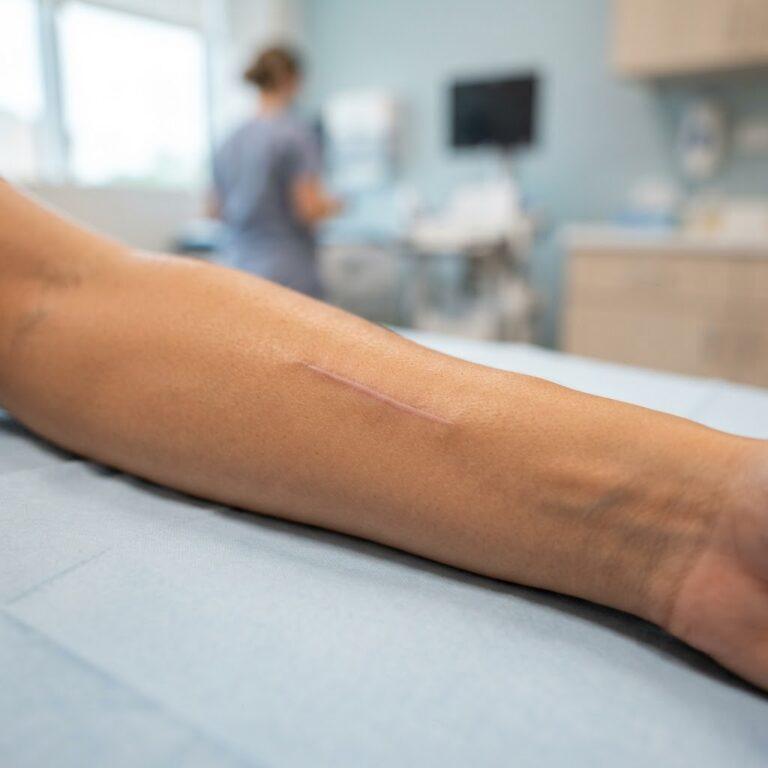
A ganglion cyst is a smooth, round, fluid-filled swelling that develops around joints and tendons, most commonly on the back of the wrist. They are the most common benign soft tissue lump of the hand and wrist, accounting for approximately 60–70% of all hand swellings. While they are almost always benign, they can be painful, unsightly, or — when large — interfere with wrist movement and grip.
What Is a Ganglion Cyst?
A ganglion is a cystic swelling arising from a joint capsule or tendon sheath. It contains a thick, jelly-like fluid (similar in consistency to synovial fluid) and is connected to the underlying joint or tendon by a stalk. The most common sites are:
- Dorsal wrist ganglion — the most common type, appearing on the back of the wrist, arising from the scapholunate ligament
- Volar wrist ganglion — on the palm side of the wrist, near the radial artery (requiring careful surgical technique)
- Flexor tendon sheath ganglion — a small, firm lump at the base of the finger, often mistaken for a bony lump
- Mucous cyst — a ganglion arising from the distal interphalangeal joint (DIP joint) of the finger, associated with underlying osteoarthritis
What Causes a Ganglion?
The exact cause is not fully understood. They are thought to arise from degeneration of the joint capsule or tendon sheath, with synovial fluid leaking out and collecting in a cystic structure. They are more common in women and in people aged 20–40, though they can occur at any age. Minor repetitive joint stress may play a role, but many ganglia develop without any identifiable cause.
Symptoms
Many ganglia cause no symptoms at all and are simply noticed as a cosmetic nuisance. When symptoms do occur, they typically include:
- A visible or palpable swelling that may vary in size over time
- Aching or discomfort, particularly after repetitive wrist activity
- Reduced range of wrist movement if the cyst is large
- Weakness of grip in some patients
- Tingling or numbness if the cyst presses on a nearby nerve
Do Ganglia Need to Be Treated?
Not necessarily. Approximately 40–50% of ganglia resolve spontaneously without any treatment. If yours is painless and not interfering with your daily life, a period of watchful waiting is entirely reasonable. However, treatment is appropriate when:
- The ganglion is causing significant pain or discomfort
- It is affecting wrist movement or grip strength
- It is growing or has not resolved after a year of observation
- You wish to have it removed for cosmetic reasons
Treatment Options
Aspiration: The fluid within the ganglion can be drawn out with a needle (aspiration) in clinic under local anaesthetic. This is a simple, quick procedure with minimal recovery time. However, recurrence rates are relatively high (approximately 50%) because the stalk connecting the cyst to the joint is not removed.
Surgical excision: Removal of the ganglion along with its stalk and a cuff of the joint capsule gives the best long-term results, with recurrence rates of around 5–15% for dorsal wrist ganglia when performed by an experienced hand surgeon. It is performed as a day-case procedure under local or regional anaesthesia. You are usually able to use your hand for light tasks within days, with full recovery over 4–6 weeks.
Arthroscopic excision: For dorsal wrist ganglia, keyhole (arthroscopic) excision is available in specialist centres. It offers a smaller scar and potentially faster recovery, with recurrence rates comparable to open excision.
The Old Remedy — Does It Work?
You may have heard of the traditional practice of striking a ganglion sharply with a heavy book to rupture it. While this can occasionally work, it is not recommended — it is painful, can cause bruising and injury, and the recurrence rate is high as the stalk remains intact.
Mucous Cysts — A Special Case
Mucous cysts at the fingertip DIP joint require careful treatment as the overlying skin is often thin and the cyst may communicate with the nail matrix, causing nail deformity. Excision requires removal of the cyst and addressing any underlying osteophytes (bony spurs) from the arthritic joint. This is best performed by a hand surgeon with experience in this area.
Book a Hand Surgery Consultation in Birmingham
At Precision Surgery in Birmingham, our specialist has extensive experience in the assessment and treatment of hand and wrist conditions including ganglion cysts. If you have a lump on your wrist or hand that is concerning you, we would be happy to see you for a consultation to discuss your options and recommend the most appropriate treatment.