What Is Surgical Mole Removal?
Moles are extremely common — most adults have between 10 and 40 on their body. While the vast majority are harmless, many people choose to have moles removed for cosmetic reasons, particularly when they appear on visible areas like the face, neck, or hands. Others are referred for removal following a GP review of a mole that has changed in appearance.
At Precision Surgery, Mr Samuel George performs surgical mole excision under local anaesthetic, meaning you’ll be awake and comfortable throughout the procedure with no pain at all once the area is numb.
Before Your Procedure: What to Expect at Consultation
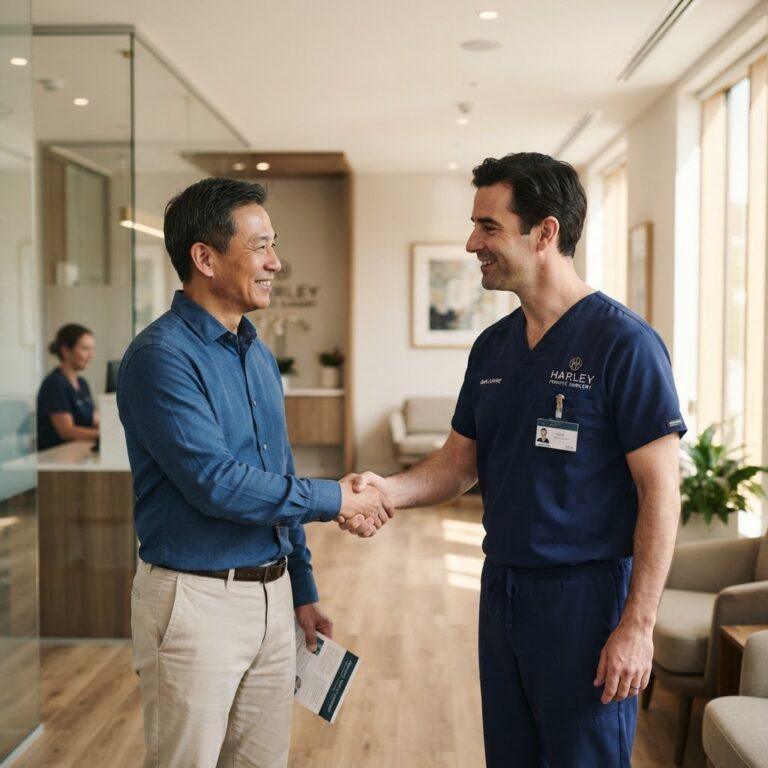
Your journey begins with a consultation with Mr George, who will assess the mole and discuss the best approach for removal. This is also the time to ask any questions you may have about the procedure, recovery, and scarring.
At Precision Surgery, the consultation fee is fully included in the all-inclusive package price, so there are no hidden costs. Before any procedure, Mr George will explain exactly what he plans to do, so you leave the consultation feeling informed and confident.
On the Day: What Happens During Mole Excision
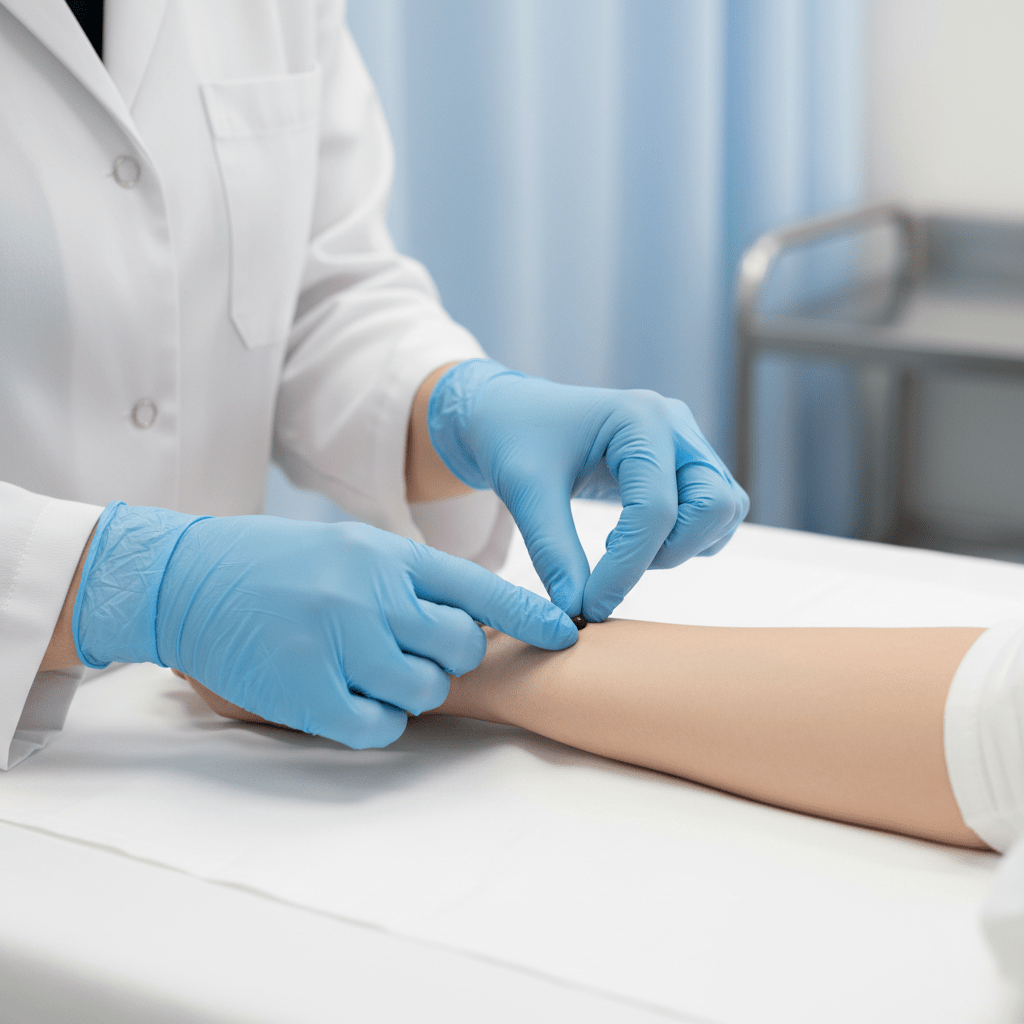
Surgical mole excision is a straightforward day procedure that typically takes around 30–45 minutes. Here’s what to expect:
- Local anaesthetic is injected around the mole — this stings briefly for a few seconds, after which the area is completely numb.
- The mole is excised in an ellipse shape, allowing the wound to be closed cleanly in a straight line.
- Two layers of stitches are placed — deep stitches (which dissolve on their own) and skin stitches (removed at 7–10 days).
- A neat dressing is applied, and you’re free to go home immediately afterwards.
Most patients are surprised by how quick and comfortable the procedure is. You can drive yourself home, return to desk-based work the same day, and resume most normal activities within a day or two.
After Surgery: Recovery and Healing
Recovery from mole excision is typically very smooth. Here’s a week-by-week guide to what to expect:
Days 1–3
You may experience mild soreness around the wound site, which settles quickly with over-the-counter pain relief such as paracetamol. Keep the dressing clean and dry.
Days 4–7
The wound is healing well. Some mild redness around the stitches is completely normal. Avoid strenuous exercise that could strain the wound.
Days 7–10
Skin stitches are removed at your follow-up appointment. This is quick and painless. By this point most patients feel completely back to normal.
Weeks 2–8
The scar will gradually fade over 6–12 months. Initially pink, it softens and lightens to a pale, flat line. Massaging the scar with moisturiser from week 2 onwards can help speed this process.
Will There Be a Scar?
All surgical mole removal leaves a scar — this is unavoidable when making an incision through the skin. However, with precise surgical technique, the scar is typically a neat, flat line that fades significantly over time. Mr George takes great care to align incisions with the natural skin lines (Langer’s lines) to minimise the visibility of scarring wherever possible.
How Much Does Mole Removal Cost?
At Precision Surgery, surgical mole excision starts from £595, which includes your consultation, the procedure itself, and all follow-up appointments. There are no hidden fees or surprise charges.
A deposit is required to secure your appointment, with the balance payable on the day of your procedure.
Book a Consultation
If you’re considering mole removal, the first step is a consultation with Mr Samuel George at our Birmingham clinic on Hagley Road. Mr George is a specialist plastic and peripheral nerve surgeon with extensive experience in minor surgical procedures.
To book, contact us on 07822 002890, email info@precisionsurgery.clinic, or complete our online registration form.
Precision Surgery is located at 88 Hagley Road, Birmingham, B16 8LU.
Related treatment: plastic surgery treatments and prices in Birmingham.