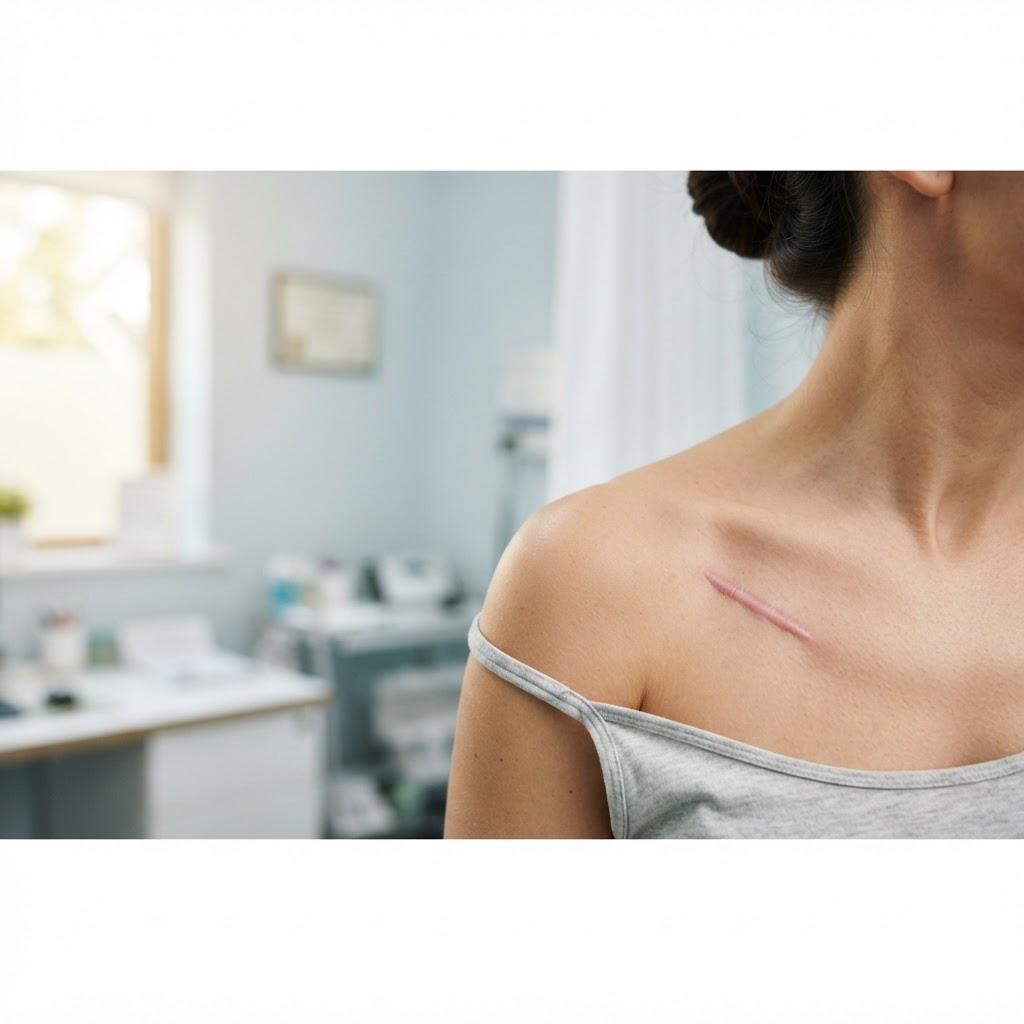
A raised scar that continues to grow beyond the original wound can be worrying, uncomfortable and difficult to hide. These scars are called keloids. They can develop after an operation, injury, piercing, injection or even a relatively minor break in the skin, and they are more common in some families and skin types than others.
The good news is that keloids can often be improved. Treatment is usually planned around the scar’s size, position, symptoms and behaviour over time. At Precision Surgery in Birmingham, assessment with an experienced plastic surgeon helps establish whether a scar is a keloid, a hypertrophic scar or another type of skin change, before discussing the most suitable options.
What is a keloid scar?
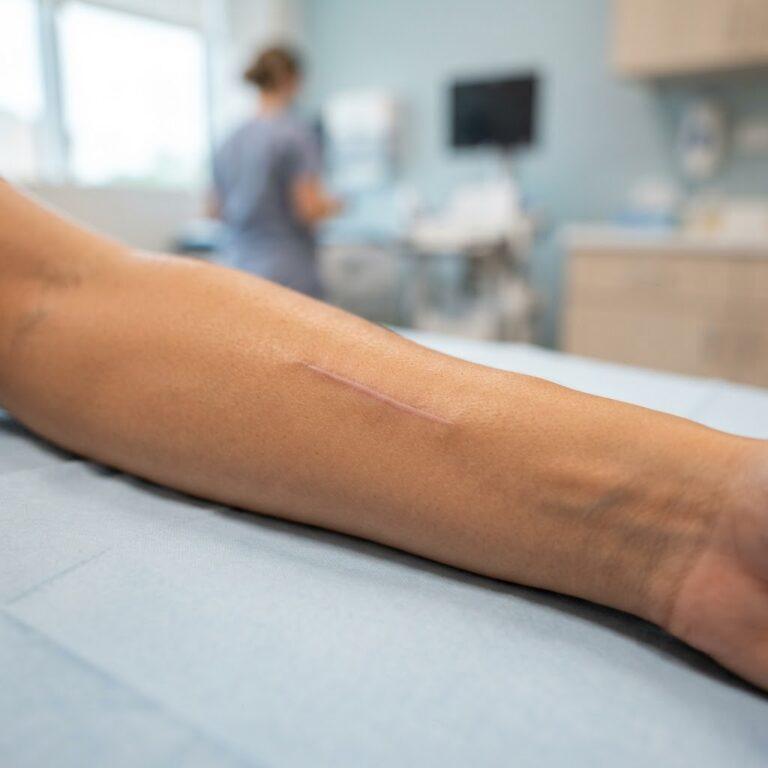
A keloid is an area of excess scar tissue that extends beyond the boundaries of the original injury. It may appear as a firm, smooth or shiny lump and can be pink, red, darker than the surrounding skin or gradually become paler. Keloids most commonly affect the earlobes, chest, shoulders, upper back and jawline, although they can occur anywhere the skin has been injured.
Keloids are different from ordinary scars because they may continue to enlarge after the wound has healed. Some cause no symptoms apart from their appearance, while others itch, feel tender, become painful or catch on clothing. A scar that is growing, bleeding, ulcerating or changing in an unusual way should always be assessed rather than assumed to be a keloid.
Why do keloids develop?
Scar formation is the body’s normal way of repairing damaged skin. During healing, cells produce collagen to strengthen the area. In a keloid, this repair response becomes excessive, leading to a build-up of collagen and other scar tissue. The exact reason this happens is not fully understood, but genetics, the location of the injury and the amount of skin tension can all play a part.
A keloid can follow an ear piercing, acne, chickenpox, a burn, a vaccination, a minor cut or planned surgery. It may appear weeks or months after the original injury. Having developed a keloid before can increase the likelihood of forming another one, so prevention and careful planning are important if further surgery is being considered.
Keloid or hypertrophic scar: what is the difference?
The terms are sometimes used interchangeably, but they describe different patterns of scarring. A hypertrophic scar remains within the edges of the original wound and often becomes flatter with time. A keloid grows outside the original wound margins and may continue to enlarge. The distinction matters because treatment and the risk of recurrence can differ.
During consultation, your surgeon will examine the scar and ask when it appeared, whether it has changed, and whether it causes itching or pain. A photograph or previous medical information may be useful. Occasionally, a biopsy is recommended if the diagnosis is uncertain or the scar has features that need further investigation.
When should you seek advice?
Consider arranging an assessment if a scar is becoming larger, repeatedly irritated by clothing or jewellery, or affecting sleep, movement or confidence. Earlier advice can be useful because a smaller or newer scar may have more non-surgical treatment options. You do not need to wait until a keloid is very large before asking for help.
It is also worth seeking advice before having a new piercing or elective procedure if you or a close relative has formed keloids in the past. No treatment can guarantee that a keloid will not develop, but recognising the risk allows the clinician to discuss alternatives, incision placement and early scar care.
What treatments are available?
There is no single treatment that is right for every keloid. The aim may be to reduce the scar’s size, soften it, relieve symptoms or make it less noticeable. Your treatment plan may involve one approach or a combination of therapies.
Steroid injections
Intralesional steroid injections are commonly used to reduce the activity of a keloid. The medication is injected directly into the scar, where it can help soften and flatten the tissue and reduce itching or discomfort. Several sessions are often needed, usually spaced over a number of weeks. The injections can sting briefly, and the treated area may be tender afterwards.
Possible side effects include temporary soreness and lightening or thinning of the skin around the injection site. These risks are discussed before treatment. Injections may be used on their own for smaller scars or combined with surgery when a larger keloid needs to be removed.
Surgical excision
Surgery removes the bulk of the keloid and may be considered when the scar is large, repeatedly irritated or causing significant symptoms. Excision alone is generally approached with caution because a keloid can recur after removal. For that reason, surgery is often followed by an additional treatment such as steroid injections, pressure therapy or another specialist scar-management plan.
The procedure may be performed under local anaesthetic for a suitable small scar, or under another form of anaesthesia depending on its size and location. Your surgeon will explain the incision, closure, likely scar and aftercare. The aim is not simply to remove the visible lump, but to create a carefully considered plan that reduces the chance of the problem returning.
Pressure therapy and silicone
Pressure earrings, dressings or garments can be useful for selected scars, particularly on the earlobe. Silicone gel or silicone sheets may also help some scars become softer, flatter and less prominent when used consistently over time. These treatments are usually most useful once the wound has fully closed, and they should be used according to your clinician’s instructions.
Other specialist options
Depending on the scar and your previous treatment, a specialist may discuss options such as cryotherapy, laser treatment or radiotherapy after excision. These are not appropriate for everyone and may be offered by specialist services. A careful review of your medical history, skin type, previous response and recurrence risk is essential before choosing a treatment.
What happens at a keloid consultation?
Your consultation is an opportunity to understand the diagnosis and compare realistic options. Your surgeon will examine the scar, ask about how it developed and discuss any symptoms or previous treatments. They will also ask about your general health, medicines and any history of difficult scarring.
You should leave with a clear explanation of the recommended treatment, possible alternatives, expected recovery and recurrence risk. It is sensible to ask how many treatments may be needed, whether the scar will be sent for analysis, what aftercare involves and when you can return to work or exercise.
Recovery and reducing the risk of recurrence
Recovery depends on the treatment used. After an injection, you can usually return to normal activities quickly, although the area may be sore for a short time. After excision, you will receive instructions about dressings, washing, activity and follow-up. Keeping appointments is especially important because additional treatment may be recommended before a new keloid has time to develop.
Protecting a healing scar from unnecessary tension, friction and sun exposure can support a better result. Do not apply silicone, massage a wound or resume strenuous activity until your clinician confirms it is safe. Contact the clinic promptly if you develop increasing redness, swelling, discharge, worsening pain or a wound that is opening.
Common questions about keloid treatment
Will treatment remove the scar completely?
Treatment can make a keloid flatter, softer and less symptomatic, but it is important to have realistic expectations. A visible mark may remain, and recurrence is possible even after a good initial result. Your surgeon will explain the likely improvement for your particular scar rather than promise a perfect or permanent result.
Can I treat a keloid myself?
Silicone products and sun protection may be useful for some healed scars, but a growing or painful lump should be assessed before you start treatment. Avoid cutting, squeezing or applying unregulated creams to the area. Home treatment can irritate the skin and delay a correct diagnosis, particularly when a scar has not been examined.
How long does treatment take?
This depends on the chosen approach. An injection appointment may be brief, while a surgical procedure requires preparation, wound healing and follow-up. Keloid management is often a process rather than a single visit, so planning for review appointments is part of achieving the safest and most satisfactory outcome.
Bringing photographs of the scar at earlier stages can help explain how it has changed. Write down your questions before the appointment so you can make the most of your consultation.
Book a keloid scar assessment in Birmingham
If a raised scar is itchy, painful, growing or affecting your confidence, a consultation can help you understand what is happening and which treatments may be suitable. Mr Samuel George at Precision Surgery provides personalised assessment and treatment planning for keloid and other problematic scars at our Birmingham clinic.
Call us on 07822 002890 or fill out our contact form to book your appointment. Precision Surgery is located at 88 Hagley Road, Birmingham, B16 8LU.
This article is for general information and is not a substitute for an individual medical assessment.
Related treatment: keloid scar removal and treatment in Birmingham.